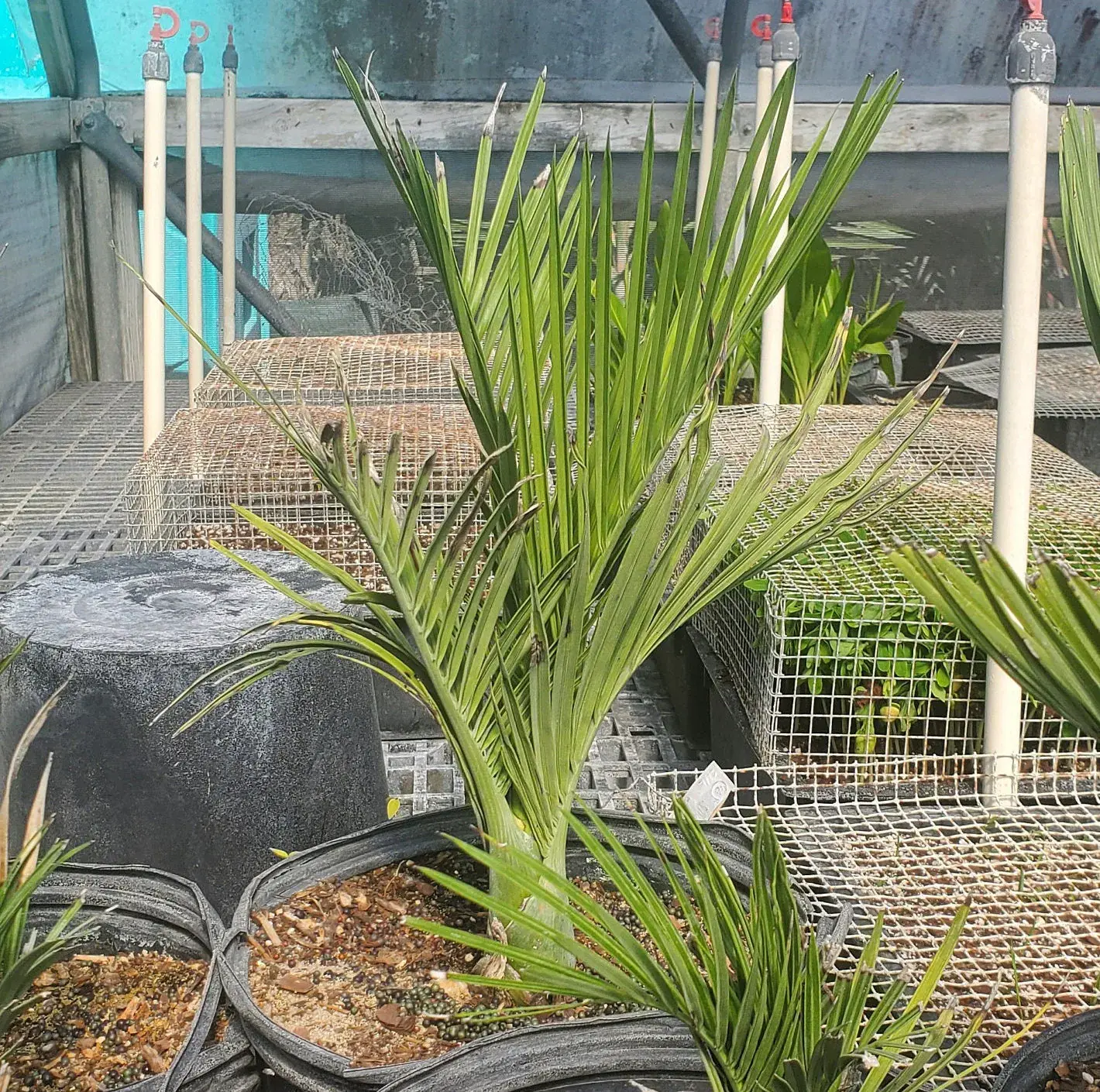
Pseudophoenix ekmanii
Common Names Dominican Cherry Palm
Zones 10b–11
A critically endangered palm endemic to the Barahona Peninsula and Isla Beata in the Dominican Republic, Pseudophoenix ekmanii is a solitary, slow-growing species adapted to dry limestone scrub. Its swollen stem, glaucous foliage, and cherry-sized red fruit make it one of the most distinctive Caribbean palms. Historically harvested for palm wine, the species has suffered severe population declines due to overharvesting and habitat loss.
Key Features
Growth Habit: Solitary; very slow-growing
Height: 13–20 ft (4–6 m)
Trunk: Strongly ventricose (swollen); up to 24 in (60 cm) diameter; gray-green with waxy internodes and prominent leaf scars
Leaves: Pinnate; 8–12 per crown; up to 8 ft (2.5 m) long; leaflets gray-green, densely glaucous, lanceolate with acuminate tips; ramenta present on abaxial midvein
Petiole: Absent; sheath green with silvery scales
Inflorescence: Branched to 3 orders; erect to arching; ~5 ft (1.5 m) long
Fruit: Globose; 0.5 in (12–14 mm) diameter; bright red when ripe
Ecology: Native to dry limestone hillsides and coastal scrub of southwestern Dominican Republic; receives 25–31 in (630–800 mm) annual rainfall with a pronounced dry season
Growing Conditions
Light: Full sun
Watering: Low; drought-tolerant once established
Soil: Alkaline limestone; requires excellent drainage
Temperature: Prefers 75–88°F (24–31°C); cold sensitive below 35°F (1.5°C)
Humidity: Moderate to low
Propagation: By seed; extremely slow germination and growth
Tolerance: High drought and salt tolerance; not suitable for humid or poorly drained sites
Landscape Use Ideal for xeric tropical gardens, limestone outcrops, and Caribbean-themed plantings. Pairs well with Coccothrinax argentea, Bursera simaruba, and Agave angustifolia.
