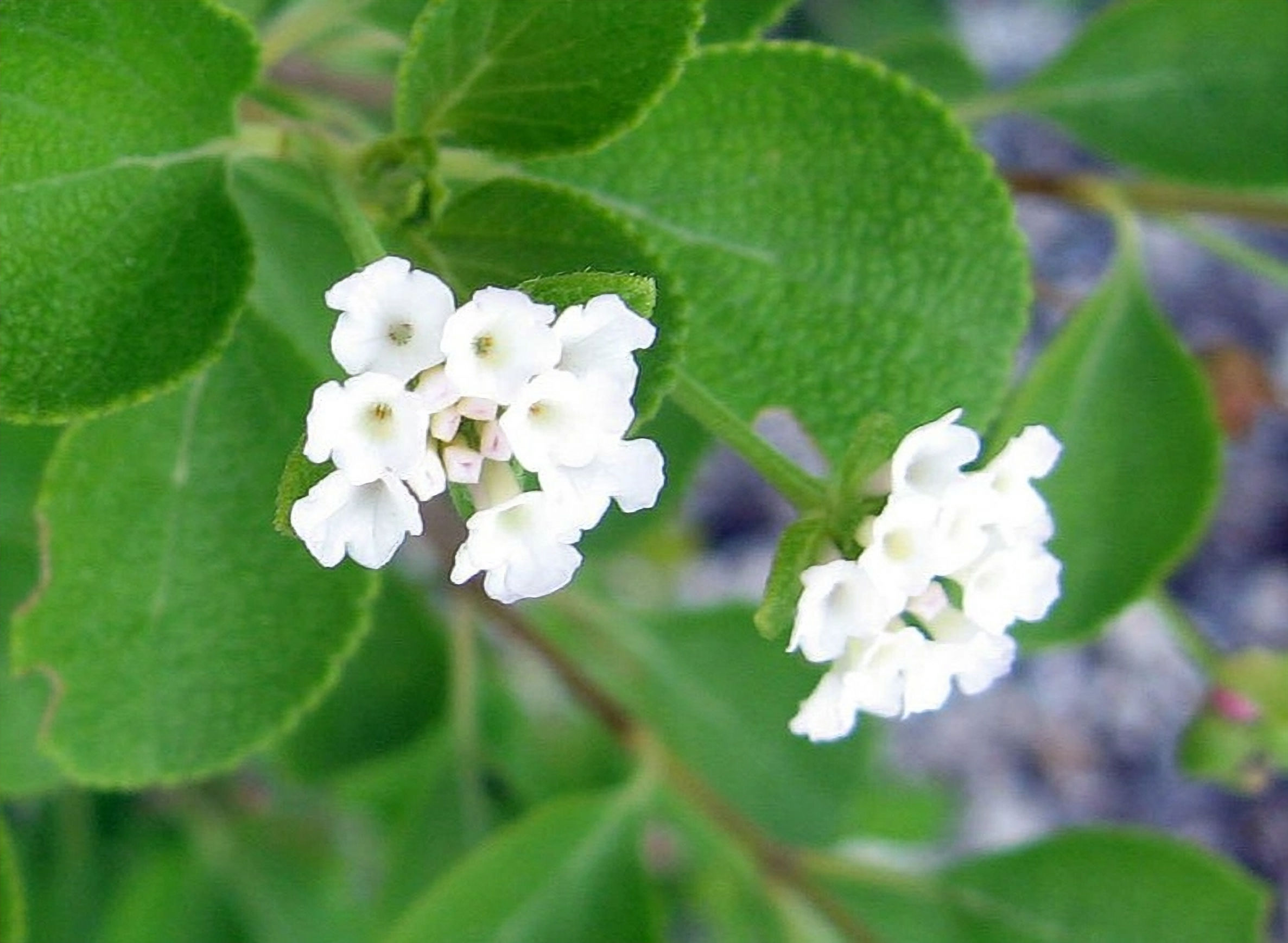
Lantana involucrata
Common Names Buttonsage, Wild Sage, White Lantana, Sea Sage
Zones 9B–11
A tough, aromatic native shrub of South Florida, the Caribbean, and tropical coastal regions, Lantana involucrata is a compact, evergreen perennial known for its fragrant white to lavender blooms and spicy-scented foliage. Found naturally in coastal hammocks, dunes, and pine rocklands, it attracts butterflies, hummingbirds, and native bees nearly year-round. Unlike its invasive cousin Lantana strigocamara, this species is ecologically beneficial and non-aggressive.
Key Features
Growth Habit: Heavily branched shrub; rounded to sprawling form
Height: Typically 3–5 ft (0.9–1.5 m); may reach 8 ft in ideal conditions
Leaves: Opposite; ovate to elliptical; rough-textured; toothed margins; aromatic when crushed
Bark: Woody stems; gray-brown; smooth to slightly fissured
Flowers: Dense clusters; white to pale lavender; small, tubular; fragrant; bloom year-round in frost-free zones
Fruit: Small purplish-black drupe; less toxic than L. strigocamara; consumed by birds
Ecology: Nectar source for butterflies, bees, and hummingbirds; larval host for sulphur butterflies; supports wildlife cover and soil protection
Growing Conditions
Light: Full sun preferred; tolerates light shade
Watering: Low; drought tolerant once established
Soil: Sandy, rocky, or limestone-based; well-drained; nutrient-poor
Temperature: Hardy to ~28°F (–2°C); regrows in spring
Humidity: High tolerance; ideal for coastal and subtropical gardens
Propagation: Seed or softwood cuttings
Tolerance: Heat, drought, salt wind, urban conditions
Landscape Use Ideal for butterfly gardens, coastal buffers, and dry native beds. Use as a low hedge, foundation shrub, or pollinator anchor in restoration zones. Pairs well with Senna mexicana var. chapmanii, Koanophyllon villosum, and Passiflora suberosa.
