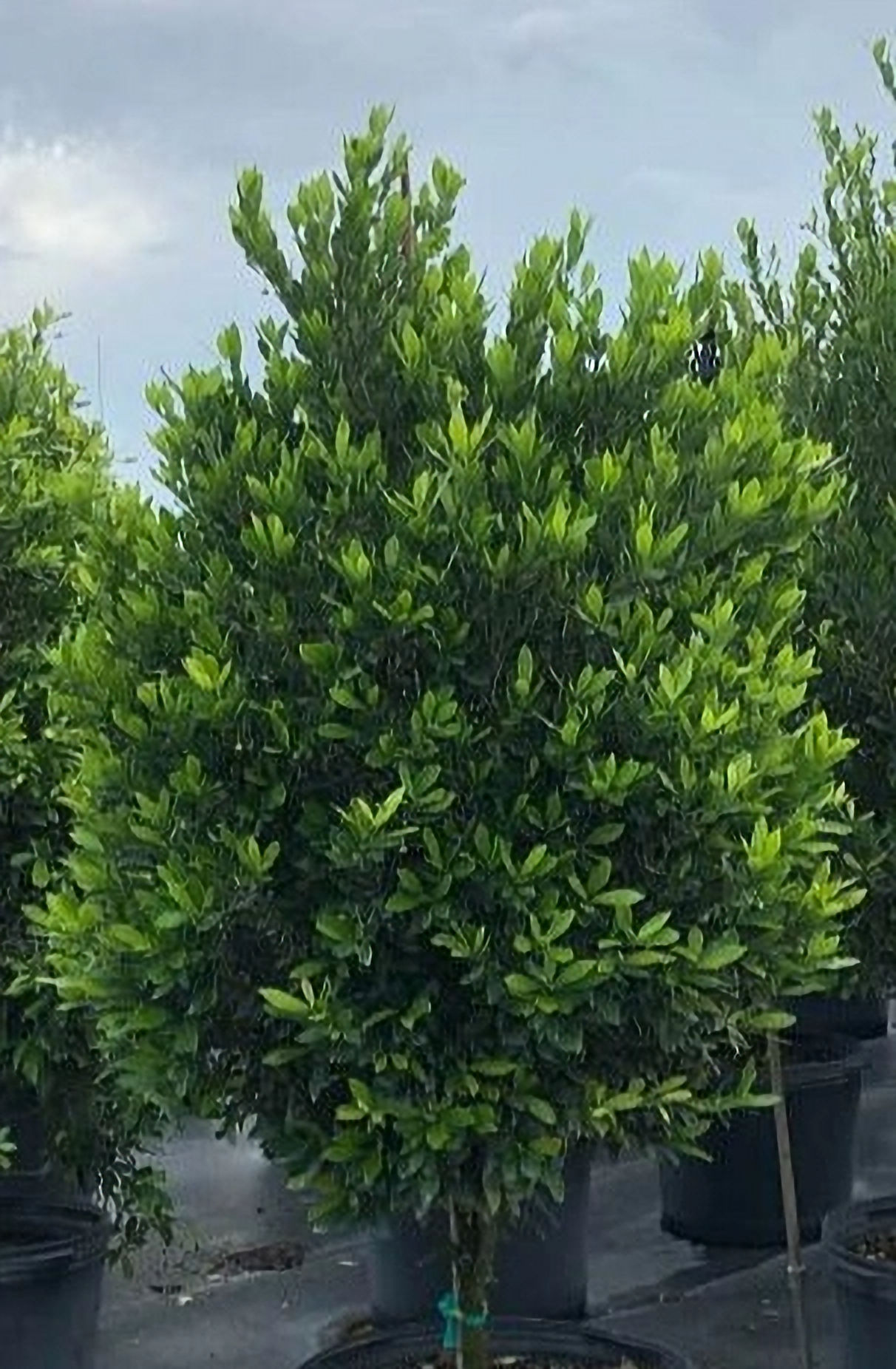
Gymnanthes lucida
Common Names Crabwood, Shiny Oysterwood, False Boxwood
Zones 10A–11
A subtle but ecologically important native of South Florida, the Caribbean, and Central America, Gymnanthes lucida is a small evergreen tree found in coastal hammocks, shell mounds, and limestone thickets. Its glossy leaves, inconspicuous flowers, and tolerance for salt wind and drought make it ideal for restoration and low-maintenance native landscapes. Though modest in appearance, it plays a vital role in stabilizing upland soils and supporting wildlife.
Key Features
Growth Habit: Upright shrub to small tree; rounded canopy
Height: Typically 10–20 ft (3–6 m); can reach 30 ft (9 m) in ideal conditions
Leaves: Alternate; simple; elliptic to obovate; glossy green; lightly toothed margins; petioles “shouldered” at twig attachment
Bark: Light gray to brown; smooth with whitish lenticels; often forms rectangular plates
Flowers: Monoecious; small, yellowish; held on short terminal spikes; bloom in spring from buds formed the previous summer
Fruit: Round capsule; ~1 cm; green turning brown; ripens late spring to summer
Ecology: Native to coastal hammocks and rocky uplands; supports lichens, birds, and pollinators; produces watery latex when cut
Growing Conditions
Light: Full sun to part shade
Watering: Low to moderate; drought tolerant once established
Soil: Sandy, rocky, or limestone-based; well-drained; pH neutral to alkaline
Temperature: Frost sensitive; protect below 40°F (4°C)
Humidity: High tolerance; thrives in coastal humidity
Propagation: Seed or cuttings
Tolerance: Salt wind, drought, urban conditions
Landscape Use Ideal for restoration buffers, hammock gardens, and low-maintenance native screens. Use in upland coastal designs or as a quiet backdrop to showier natives. Pairs well with Guapira discolor, Eugenia foetida, and Simarouba glauca.
